Showing posts with label Reflections from the Well. Show all posts

Tuesday, August 26, 2014

Reflections from the Well
On Writing Craft, Creativity & Inspiration
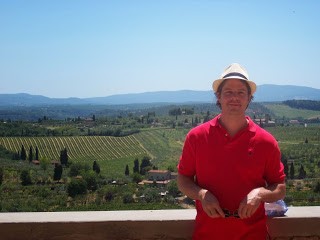


By Alexander Slagg


Is the End Just the Beginning?

I was recently inspired to read Walt Whitman’s Leaves of Grass again, especially the poem “Song of Myself.” I needed some inspiration and guidance from a source that championed individuality and encouraged a sensual relationship to all that life has to offer. Walt Whitman was my man.

I recall last reading this iconic collection and poem back in the summer of 2002. I have vivid memories of riding the bus from my apartment in San Francisco to my first “real” editing job far out in Marin County, reading a tattered copy as the sun-scorched Northern California landscape unspooled outside the window. As I rolled along in air-conditioned comfort, I remember being awed by the spiritual depth and breadth of this work — some mid-19th century dude had put to paper these expansive mystical observations. Amazing! And I was intrigued by Whitman’s erotic themes. Again, some mid-19th century dude had written this. Amazing! “Song of Myself” read like a secret peek into someone’s diary from a long time ago.

The first thing that caught my attention this time around was in the introduction, which details some of the collection’s writing and publishing history. Whitman did not simply gather this collection of work and then release it to the world — end of story. The first edition was published in 1855. By the time Whitman died in 1892, he had published from 6 to 9 subsequent editions (depending on how you define an edition) of Leaves of Grass. With each edition he revised and tinkered with his masterwork, rephrasing, reorganizing, shifting around content, adding content. With the death-bed edition of Leaves of Grass, the collection had grown from 12 poems to almost 400 altogether.

As an artist, what is to be made of this constant tinkering and reworking? When is a writing project done? Whitman continued to update “Song of Myself” and other poems from the original edition for more than 36 years. In my own experience, this onerous dedication to refining a creative work seems extreme. I like to believe that every creative project is on its own time frame and has its own unique gestation period. But I also think that it’s very easy for an artist to get sucked into the revision quagmire.

I finished writing my first novel in 2007, the initial draft having taken about two and a half years. Over the past seven years I have workshopped it and gone through extensive rewrites. I’m currently on draft four. When will this project be done? Not soon enough for my tastes. The thought of sitting down to work through subsequent drafts is about as appealing as a rusty nail through my hand.

Through the entire rewrite process, I’ve wanted to do nothing else but move on to the next project (which I’ve done here and there, eventually returning to another draft of my novel). My natural artistic temperament is at the opposite end of the spectrum from Walt Whitman. I definitely think of myself as a one-and-done artist. I want to capture the initial inspiration — and keep having that experience over and over again. That’s where the buzz is for me. That is my writing raison d’etre.

But I’ve stuck with the rewrite process of my novel, as difficult as it’s been. Why? I guess it’s because I want to grow as a writer. Rewriting forces you to look at your writing and find ways to improve and refine it. Do it enough, and you’ll grow as a writer.

I’ve come to believe that there are two complementary energies that are needed to be a complete artist: inspiration and integration. You need to be open to inspiration’s calling and you need to be able to work the craft afterword, refining your creative vision and, over time, integrating those improvements into how you approach subsequent projects. Through a commitment to this ying-yang process, you can become the most whole and developed artist you are capable of becoming.

Monday, July 28, 2014

Reflections from the Well
On Writing Craft, Creativity & Inspiration


By Alexander Slagg


Time Travel, of a Different Sort

I did some time traveling recently. Like any good sci-fi movie, my life had reached a crisis point and only going back in time would provide the change I needed to resolve this problem and move forward to live happily ever after. My conduit for this journey into the past was the summer intern at my day job, Myles. Once upon a time, I was Myles, a shaggy-haired college student with a constantly receding horizon that was my future, open and without limit. I am no longer Myles, I am me: an aging creative guy now with children and adult responsibilities, feeling the dueling pressures of grownup responsibility and creative ambition.

Myles was introduced to the plot line of my life at work one morning when my manager brought him by my cubicle and introduced him. He dressed casually but appropriately for office life, wearing tan khakis and a Greg Norman polo shirt. It wasn’t readily apparent that he would serve as a catalyst for change. On our first meeting, he came across as slightly privileged and the product of an insular suburban life — but a fitting reflection of my own upbringing and younger self. The internship was simple: throughout the summer, I was to teach Myles the finer points of writing and editing marketing materials.

We began this process in earnest, emailing our communications back and forth, though we were separated by only a cubicle wall — an early lesson in the ways of corporate life. I assigned him some writing to edit and made plans to meet up to review his edits and to walk him through my own editing process.

Around this time, I was creatively cramped on a number of fronts, having great difficulty getting started on my next creative project. I had hit a writing roadblock. The bricks of this particular wall stemmed from recent life turmoil: getting divorced and now raising two young children myself. This new development in my life had knocked me off kilter, causing me to contemplate my priorities.

While married, I managed to fool myself into thinking that I was no longer a self-absorbed “artist” living for myself and my creative mission. I was a partner, and soon enough a father. I now had these other more important roles to play. But this was not entirely true. I continued to write and do other creative projects. There wasn’t much “choice” in it. This was what I did — art. Now I had to find ways to squeeze it in with my growing responsibilities.

Not until my marriage imploded and I suddenly found myself responsible for the lives of a four- and six-year-old did I start the real process of figuring out how I was going to juggle all these wants and needs crowding my life. And in that process, I suddenly came across this new wall now blocking access to my creative flow. Questions were bubbling up from some subterranean aquifer inside me. These questions essentially boiled down to: Why was I wasting precious time and energy on creative projects when I should be devoting myself to supporting my children and their inexhaustible needs? The parental urge to self-sacrifice can be strong, and I was feeling it keenly.

I grappled with this question for weeks, maybe months. It was on my mind when I woke in the morning, while driving to work, doing the dishes, laying down for bed at night. It was pervasive. I was thinking about it on my drive over to the coffee shop to meet up with Myles and go over his editing. I was sitting at a wood table not far from the entrance, setting up my laptop. A flash of sunlight played off the door’s glass surface as Myles entered, momentarily blinding me as he sat down.

We chatted for a bit and drank our coffee, going over the editing assignment before moving on to conversation about music and writing. Myles was relating to me the genius of George RR Martin, but my mind was a million miles away, wondering why I was even having this conversation about writing — a topic that felt like a far-off luxury that I could no longer afford. Tuning back into the present, I decided to pose to Myles the question that had been eating away at me.

“Why do you write?”

The reality of the coffee shop seemed to telescope around us as the words passed through my lips. The expression on Myles’ goatee-framed face was one of quizzical contemplation. It was in this moment that the time travel occurred. I was no longer sitting in the older, experienced editor’s seat. I had warped back into the seat of the young writer unmolested by the grind of life experience. The answer that came from Myles’ mouth were words that once could have come from my own.

“I’ve never really thought about it before. I want to be a published author because I think it would be cool. I write because it's cool.”

The truth of his words struck me. I was inside Myles when he uttered these words. I felt the nonchalant innocence of them. And that carefree feeling stayed with me as I was pulled back into the future and to the present. There were no outward signs that anything mindblowing had just occurred as we packed up our computers and headed our separate ways into the stifling summer heat. But I felt like a different person as I motored down the highway and back to my flat in the city. I felt renewed.

Myles’ simple words had given me a key to open all of the locks and undo the chains of adult responsibility that had so tightly bound me. He had reminded me that creativity does not operate through a set of logical rules, so I should not make logical demands of it. I did not need a reason to write. Sitting down to write is its own reward. Giving yourself time to do something simply because you enjoy doing it, because it’s cool, is a necessity.

Monday, May 26, 2014

Reflections from the Well
On Writing Craft, Creativity & Inspiration


By Alexander Slagg


Breaking the Rules on Dialogue

Never use a verb other than “said” to carry dialogue. Never use an adverb to modify the verb “said.”
— from Elmore Leonard’s Ten Rules of Writing

Elmore Leonard is a writing hero of mine. I remember coming across these rules somewhere, before I had read any of his books. These Moses-like commandments flew in the face of my approach to writing at the time. I was young and Beat-inspired, wanting to throw in every kitchen-sink, Michael Chabon-esque word I could think of. I was trying to communicate the experiences I was writing about in as much depth and breadth as I could. I was showing off.

And then I read this old fuddy-duddy’s “rules” — hey man don’t try to shackle my creative freedom — and I paused. This guy wasn’t trying to communicate the totality of human experience, he was talking about telling a successful story. Hmmm. I went out and read several of his books and I was quickly hooked.

Elmore Leonard tells a pretty good story. By that I mean: the plot operates efficiently, the writing itself is slim and toned, the characters are sketched and leave room for the imagination to fill in the details, the dialogue glides like a figure skater. All good writing qualities. And all qualities that I aspire to in my writing.

But...these two particular Leonard writing rules have always rubbed me the wrong way. And I think they bother me because in real life no one just “says” something. Reality is much more complex and detailed than that. People speak with pauses and emphases,  intonations and inflections. If you happen to speak Chinese, for example, you know that the inflection of how a word is spoken can give it vastly different meaning, asking for “beauty” instead of “tea.” If I’m going to try to get across a semblance of how people actually talk, I need to be able to describe it.

Conventional creative writing will instruct you to not to get in the way of dialogue with descriptions. Let it flow. Let the characters’ actions and descriptions “communicate” how the reader should interpret the dialogue. I think that’s garbage.

Part of the problem is that writing is at its essence a poor communication medium for describing the finer details of reality. Words are actually very poor signifiers of information. They’re too limiting in their ability to convey the vast universe of possible action/experience/behavior. And they aren’t very good at handling subtle nuances, such as how people talk. When we do try to get more specific, it's usually clunky. With English, one of the lazy ways we’ve come up with as an approach to describing action is to take an adjective such as “rapid” and clamp an “ly” onto the back of it. “Rapidly.” Here's an example to consider:

“Stop. Don’t open that door. Seriously. You will regret it,” Felix enunciated rapidly.

No, Mr. Leonard, “enunciated rapidly” doesn’t exactly roll off the tongue. It’s awkward; it slows the reading down. I get that. But as a reader, I certainly appreciate knowing specifically how Felix spoke. I can clearly imagine "enunciated rapidly" much better than if Felix merely "said" something. It makes for a richer reading experience. 

In some instances, not having an descriptor of how the character is speaking can even be confusing. Consider this dialogue from Leonard’s Maximum Bob. Two characters, Elvin and Dr. Tommy, are feeling each other out, determining if they can do some shady business together. Dr. Tommy’s talking about a rifle here, using it to kill someone.

Elvin said, “What’s wrong with you?” The guy acting strange, his eyes getting a funny look, while his voice was fairly calm.
“Or would you like to use it? Dr. Tommy said. “You have the experience, uh? You’re looking for a score...I’m serious now. You listening?”
“Yeah. I’m listening.”
“I’ll pay you to kill a man. What do you say?”
What Elvin said was, “How much?”

This dialogue comes from a crucial early scene in the story. Elvin’s acceptance of this “job” sets the whole conflict of the novel into motion. As a reader, I’m riveted as I read this. But...how am I to read “Yeah. I’m listening.” in this exchange? Is it said with doubt, conviction, feigned disregard, bluster, salivating interest? Who knows.

It might be nice to know, to be able to understand  where the character Elvin is coming from in his response. And sure, reading the surrounding text of the story can probably sketch for the reader how Elvin is saying these words. But why does this responsibility get pushed back onto the reader? The writer’s driving the story here, can’t he provide us with what we know to interpret this crucial scene?

Dialogue is crucial to a story. Because of its importance, it needs to be handled thoughtfully. Give some real thought to how those words are coming out of his or her mouth. More often than not, Mr. Leonard’s advice will suffice; just use “said.” But the rules are meant to be broken. On occasion, some detailed description of how the words are spoken can be crucial to keeping the reader engaged.

Wednesday, April 2, 2014

Reflections from the Well
On Writing Craft, Creativity & Inspiration


By Alexander Slagg


Living in the Limelight


I stood in my kitchen as Rush’s Moving Pictures played on my computer, a glass of wine next to it on the counter, a catfish stew gathering flavor in the pan on the stove. While I cooked my dinner and listened to Geddy Lee’s eagle-like shriek reverberate through the speakers, a childhood montage played across the movie screen of my mind. Itinerant summers spent at the swimming pool, covert missions to my brother’s bedroom and his boombox so I could air guitar along to his rock cassettes, secret rendezvous with neighborhood girls before I knew what I was supposed to be doing with them.


This album holds a special place in my heart because it was woven into the tapestry of my life at a rich and fulfilling time. So when I saw it on sale at one of the digital music stores, I scooped it up. Until that night it had been years since I’d listened to it. The way this recording stirs up these memories in me — to this day — is a unique aesthetic experience. Not another human being can relate to this music in quite the same way that I do. It’s embedded in my experiencial DNA. That’s pretty cool — and not bad for a power trio rock band from Canada.


Moving Pictures was released in 1981 and reached #3 on the Billboard charts that year, eventually being certified quadruple platinum. Power trio? Canadian? Top of the charts? Yep, you read that right. And the guys in Rush did it all without even once resorting to synchronized dance routines at their concerts. So what was the appeal? As an artist, I think that is a good question worth pondering.


There are many reasons why Rush should not have achieved the pop success they have. Take your pick: they have written many epic songs that don’t fit into the 3-minute pop format; their songs often have complex and shifting time signatures; they write about heavy topics such as global politics and reference literary works; they are not photogenic; they are Canadian. All of these are high hurdles for a pop band to overcome to become platinum-selling artists.


I think it’s safe to say that the record company tastemakers were not looking for a band like Rush, nor was the pop market. Yet the band still went out and did its thing, making the music it wanted to make, taking it on tour, and discovering that indeed there was an audience for it. The record company saw an opportunity, took a chance on this band, and it has paid off handsomely. It seems an unlikely success story, but one that holds an important lesson for any artist.


As writers, we see what’s popular at the bookstore, what titles are perched atop the New York Times bestseller list, what kinds of books get made into movies. It’s easy to determine what kind of writing appears to have a market. If your goal is popular success, it’s a natural reaction to try to align your writing with what’s perceived as successful, you and thousands of other writers coming to the same conclusion.


It’s more difficult to stick to your guns and cultivate your unique and individual approach to writing and storytelling, maybe spending years toiling in obscurity while you figure out and embrace what kind of artist you truly are. It’s more difficult to be the first Twilight or Harry Potter, or the first (and only) Rush. But this path is certainly a more fulfilling experience for the vast majority of us writers who will likely not be the next Stephen King or JK Rowling. It’s more fulfilling because we are working the craft, we are busy being artists, we are human beings fully engaged in life at the deepest level, rather than fireflies blindly circling around an unobtainable illusion. And if we do find success — all the better that we reached that goal while staying true to our artistic vision along the way.

Touching on various aspects of the writing process, Reflections from the Well offers a literary lounge, where writers and other creators are invited to share their own experiences. Feel free to share your own experiences by commenting on a post.

Monday, February 24, 2014

Reflections from the Well
On Writing Craft, Creativity & Inspiration


By Alexander Slagg


Finding Yourself in the Books You Read

Every work of art is one half of a secret handshake, a challenge that seeks the password, a heliograph flashed from a tower window, an act of hopeless optimism in the service of bottomless longing.


— MIchael Chabon, Manhood for Amateurs


They came from Santa Claus one Christmas: a copy of both The Dharma Bums and On the Road propped up next to my stocking, awaiting me as I moped down the stairs, rubbing my eyes that morning. I didn’t read them at first. Jack Kerouac’s bibles to the good life sat on my tidy little desk in my tidy little room, tidy little house in a tidy little suburb.


I couldn’t tell you today what Santa Claus was thinking all those years ago. The promise of what Kerouac offered me in those books was nowhere to be seen as I traipsed through the snow that winter, back and forth to my prison-like public high school. That’s how it felt. That’s how suffocating safety and security feels to an adolescent, I guess. As I now know, Santa is a visitor from the Imagination. And he had a very important gift to bestow upon me.


For no reason in particular, I took those books with me to Florida in the spring. I needed something to distract me from this annual family getaway, wherein everyone did whatever they could to get away from the family for a week. Arriving at the condo we were staying in, I unpacked my suntan lotion, my swimsuit, my Walkman and Led Zeppelin cassettes. And when I was finally alone, I unpacked Kerouac’s books and started reading.


I read them on the beach. I read them on the deep-sea fishing boat, because...I don’t like to fish. I read them in the rental car on the way to dinner each evening. I read them in bed with a flashlight. In a week’s time I had read both books cover to cover. Aside from a run of Chris Claremont-written Uncanny X-Men comics, I’d never been so drawn in by anything I’d read.


All of the real estate tax money that funded my prestigious high school, all of the hours spent by bored English teachers assigning The Catcher in the Rye and To Kill a Mockingbird in the hopes of inspiring some student interest in literature, all of the sleepy hours spent numbly reading these authority-approved books — all had been for naught. Kerouac’s books spoke to me in a voice divine and the message was clear: Everything you’ve been told is wrong. There is a whole world out there for you to explore and discover. Adventure is waiting when you’re ready to take that first step.


***


The act of writing is a solitary activity. The act of reading is a solitary activity. But somehow, amid all this aloneness, a connection is formed, an alchemical process takes place. The saltpeter, sulfur, and charcoal of the imagination mix and something magical happens. The reader has an experience that bonds him or her with the writer.


This connection is magic. It might span mere seconds between a Tweet and a response, or it could span centuries. You know it when you feel it. But many don’t know the value of paying attention to this experience.

A piece of art is a mirror. It’s reflecting back to you yourself. Do you recognise yourself in it? If you don’t, then PAY ATTENTION! Because you are seeing yourself. No, silly, not literally. Look past the obvious, into the world of symbols and archetypes and fairies. There you are, or some aspect of you. Now your job is to realize that connection — draw it out of the imaginary and more fully into the “real” world.


Touching on various aspects of the writing process, Reflections from the Well offers a literary lounge, where writers and other creators are invited to share their own experiences. Feel free to share your own experiences by commenting on a post.

Monday, January 27, 2014


Reflections from the Well
On Writing Craft, Creativity & Inspiration


By Alexander Slagg

The Fountainhead of Creativity

You hunt them, you get in your little boat, you paddle onto the dark water, and you wait. You set your nets and you wait. And sometimes you pull up your nets and something the size of a freight train has gone through them, and sometimes minnows. But occasionally something will come into the net that is not so small as to be trivial and not so large as to be incomprehensible. This thing can be wrestled with for hours and eventually brought home to show the startled folks back on shore.
— Terence McKenna

I am inspired by this quote from Terence McKenna, the ethnobotanist, philosopher, and celebrated psychedelic guru, who passed away in 2000. He’s talking about his use of psychedelics as a way for generating transformative ideas. But for me, he could be talking about the creative process itself. This is how I imagine it.

Where do our creative ideas come from? I imagine an underground lake or aquifer, similar to the kind where McKenna’s boat has rowed out onto. We humans spend most of our lives above ground, on the surface. Our conscious, day-to-day lives unfold up there. Each of us individuals living out our personal adventures topside. But beneath the surface of all this conscious activity there is an aquifer, an underground ocean of subconsciousness shared by everyone. This is where creative ideas come from.

Being born into the conscious world, we inherit a legacy of cultural experience and knowledge. You only have to look out your window to see buildings, roads, sidewalks, sewer and telecom systems, an entire landscape left by those that came before us. Each of us comes along as just the latest link in a chain of experience that can be extended back tens of thousands, maybe millions, of years.

The same holds true for the internal human landscape, where creative ideas take shape. Look at stories. Storytelling is a basic human function. Whether it’s retelling the day’s events to a spouse, a detective drama on TV, or a children’s bedtime story, humans use stories to share information in all sorts of contexts. Generations of storytellers have collectively created the archetypes, the worn pathways, that we all use as the building blocks for our stories. The separated lovers, the adventuring hero, the remote wise sage, the evil king, the helpful animal friend. Think of how many lips Grimm’s fairy tales passed through before you first heard Little Red Riding Hood.

This can be a difficult idea to swallow, especially for artists, who often pride themselves on the “originality” of their ideas. We all have egos and we all like to imagine ourselves as independent beings operating off our own individual compasses to navigate life. The thought that there may not be any “original” thoughts or stories to tell seems ridiculous.

Another way to approach this is the Buddhist concept of emptiness: We do not have individual identities, we are empty, a small part of a much larger experiential unfolding, which is life itself. What we refer to as our “selves” is a singular manifestation of this unfolding, the crest of a single wave in the ocean — so it is unique and individual in that sense. But in reality, we’re facets of some all-encompassing diamond, our creative ideas the glimmers and sparkles we give off.

The underground aquifer is related to that notion of emptiness. Individual human beings don’t have an individual subconscious, per se, but share a collective unconscious, an interconnected human experience unfolding on a subconscious level. Maybe that aquifer even extends to other living beings: plants, animals, anything with life force. What kind of story might a rabbit or a carrot have to tell?

I think that because human beings spend so much time focused on the above ground conscious world, that most of us allow this subterranean connection to atrophy. Most of us don’t exercise our subconscious muscles enough.

But not the artists. While everyone has the necessary human software to draw from the aquifer, it is the artists that have exercised and kept this connection updated and functioning. Humanity certainly needs its lawyers, traders, warriors, and doctors. All have a space to occupy beneath the sun of the conscious world above.

But that’s only part of the human experience. There’s so much more going on beneath the surface of things. And it is the dreamers, the artists, that travel between the worlds, rowing out onto that vast underground lake to hunt, netting the wisdom and meaningful experiences of all who have come before us and returning to the surface to share their bounty with others. 


Touching on various aspects of the writing process, Reflections from the Well offers a literary lounge, where writers and other creators are invited to share their own experiences. Feel free to share your own experiences by commenting on a post.


Monday, December 30, 2013

Reflections from the Well
On Writing Craft, Creativity &Inspiration


By Alexander Slagg

Word Counts: A Waste of Time?

Other than the size of sexual organs, there are few things exaggerated as much as a writer’s word count. Meeting up with your buddies at the coffee house or the tavern, it’s important to come off as a successful, focussed, committed creative artist.

“How much did you get done today?”

“Oh, I knocked out 5,000. I was feeling a little under the weather.”

(5,000 words? Sorry, I didn’t ask how many porn sites you checked out or Facebook posts you read, I was asking about your writing, ha ha.)

Writing is a very insular and personal experience. As such, people are wary of actually talking about it too much. This leads to there being little in the way of real dialogue about work habits among writers. That void leaves a lot of space to fill, so whatever conversation there is, you can bet it’s exaggerated.

Why would someone bother exaggerating their word count? It’s not a stretch to suggest that the psychological profile of most writers includes a streak of either insecurity or narcissism, or both. Writers exaggerate for all sorts of reasons, but ultimately it comes down to making themselves feel better about their progress or making others feel poorly about their own.

Luckily, we live in a magical time where we no longer have to seek out answers to perplexing questions from wise sages who live high on some isolated misty mountain top. We have the Internet! We can tap into the collective wisdom of all humankind for our answers.

A cursory search for “daily word count” or some such term will yield a confusing array of answers. 1,200 words, 600 words, 2,000 words, 6 pages. There’s an entire website devoted to the idea that 750 words is the appropriate word count for a day’s writing. If you were to ask Tom Robbins, you would not surprisingly get a very contradictory reply. He has said in interviews that he may spend an entire day tinkering with one sentence. Quality over quantity.

So what’s the answer: 1,000 words or a single sentence? I’d like to suggest that if you’re concerned with word count you’re focused on the wrong thing. Word count is a helpful benchmark for daily progress, but it is not the singular measure of a successful day of writing.

Creative projects are more than mere items to check off of your to-do list. So they shouldn’t be judged by some strict, up or down threshold. And that’s part of the problem with following a strict word count, you either hit the count or you don’t, you’re either a hero or a zero. Focusing on it too much risks turning it into a psychological roadblock. You start to focus on that count rather than simply letting the writing flow. And that can lead to writer’s block.

That flow is what all writers are after when they sit down to write. You want to get in that zone and let the words pull your fingers across the keyboard or your pen across the paper.

Creative flow seems to abide by rules similar to those that come into play with quantum mechanics. It doesn’t benefit from close observation. The act of closely observing creative flow changes it, and can easily cause it to seize up. Creative flow operates beyond the conscious mind. Attempting to consciously control or observe it will only screw it up.

If you need a benchmark to guide your writing, I suggest following the KISS principle: Keep It Simple, Stupid. Commit yourself to sitting down and writing every day. Write for as long as comfortably fits your schedule. A recent college graduate still mooching off their parents likely has hours of free time to commit to writing. A single working parent may only get in a half hour.

Committing to a daily writing schedule is committing to the writing lifestyle. You’re a real writer. Welcome aboard. Soon enough, sitting down to write will become something that you need to do, word count be damned. Your day will feel incomplete if you don’t get to it. One of the benefits to this lifestyle approach to writing is that it is conducive to creative flow. The more you do it, the easier it gets to tap into that creative flow. Your writing will get better and easier. And you will feel better about yourself as a writer.

Touching on various aspects of the writing process, Reflections from the Well offers a literary lounge, where writers and other creators are invited to share their own experiences. Feel free to share your own experiences by commenting on a post.

Monday, November 25, 2013

Reflections from the Well
On Writing Craft, Creativity & Inspiration


By Alexander Slagg

Giving Thanks

It is Thanksgiving in the United States this week. While I love to quibble over the historic record of how and why we celebrate certain holidays, I’m more interested in the underlying theme – giving thanks. As we move into the winter months and the tail end of the year, it’s natural to want to slow down and take stock, recognize and celebrate all of the fortune that has come our way over the last year. So I’ve put together a few things that I’m thankful for, and that I think others practicing the craft of writing can be thankful for as well.

Be thankful for the luxury of time you have to write. There are many people out there living paycheck to paycheck, making just enough to get by. They are focused on putting food on the table, keeping their children clothed, keeping the heat on. They have no free time for activities that aren’t tied to day-to-day living. You are handling the business of living your life AND you are making time to write. Congratulations. It doesn’t get much better than that.

Be thankful you have the ambition to write. Getting anywhere with your writing requires you to push  yourself. No one is waiting for the publication of your novel or poetry chapbook. But still, you are tapping away early in the morning before work, sneaking in a few sentences or lines on your phone over lunch, typing and basking in the blue light of your laptop in bed as you settle in for the night. Every time you sit down to write, you are moving forward. You are a hustler, making something out of nothing.

Be thankful for the gift of your imagination. We are all born with the ability to dream and make believe. But not all of us retain these skill sets. As we grow as humans, life has a way of dampening our imagination. School and other social structures turn our attention to being practical, cultivating “real” life skills, such as that algebra that we all put to good use as adults – ha! Imagination is a muscle, if we don’t exercise it, it withers. As a writer, you have made the choice to be a pumped-up imagination babe or beefcake, exercising and toning that muscle. That’s a wonderful choice.

Be thankful for the progress you’ve made on your writing this year. Are you exactly where you were on your writing projects on January 1? No, you’ve made progress. That idea in your head has taken on life. It has grown and changed in ways that you never imagined at the outset. Maybe not as much as you thought you might do, but you have made strides.

Be thankful for the people around you. Writing is nothing without other people. While it is a solitary activity, writing isn’t done in a vacuum. We have family, friends and significant others that support us and cheer us on in our pursuits. We have failed relationships that have wounded us enough to turn us inward and seek out writing as a way to vent or make sense of our troubles. We have writing group members that alternately buoy us and competitively spur us on to writer better, faster, stronger, longer. For good or bad, the people around you have an effect on you. The question then becomes, have you, as a writer, figured out how to glean something valuable from it?

Be thankful you’re still alive and writing! As the Bible says, somewhere around Proverbs 27, we are not promised tomorrow today. Tom Clancy, Doris Lessing, Elmore Leonard, Seamus Heaney, Richard Matheson, Daniel Hoffman, Sylvia Browne – all great and/or successful writers that passed away in 2013. You’re still alive, you still have time to join the pantheon. Get to writing!


Touching on various aspects of the writing process, Reflections from the Well offers a literary lounge, where writers and other creators are invited to share their own experiences. Share your experiences with Alex for possible inclusion on the LWN blog or in his next reflection at aslagg@literarywritersnetwork.org.